
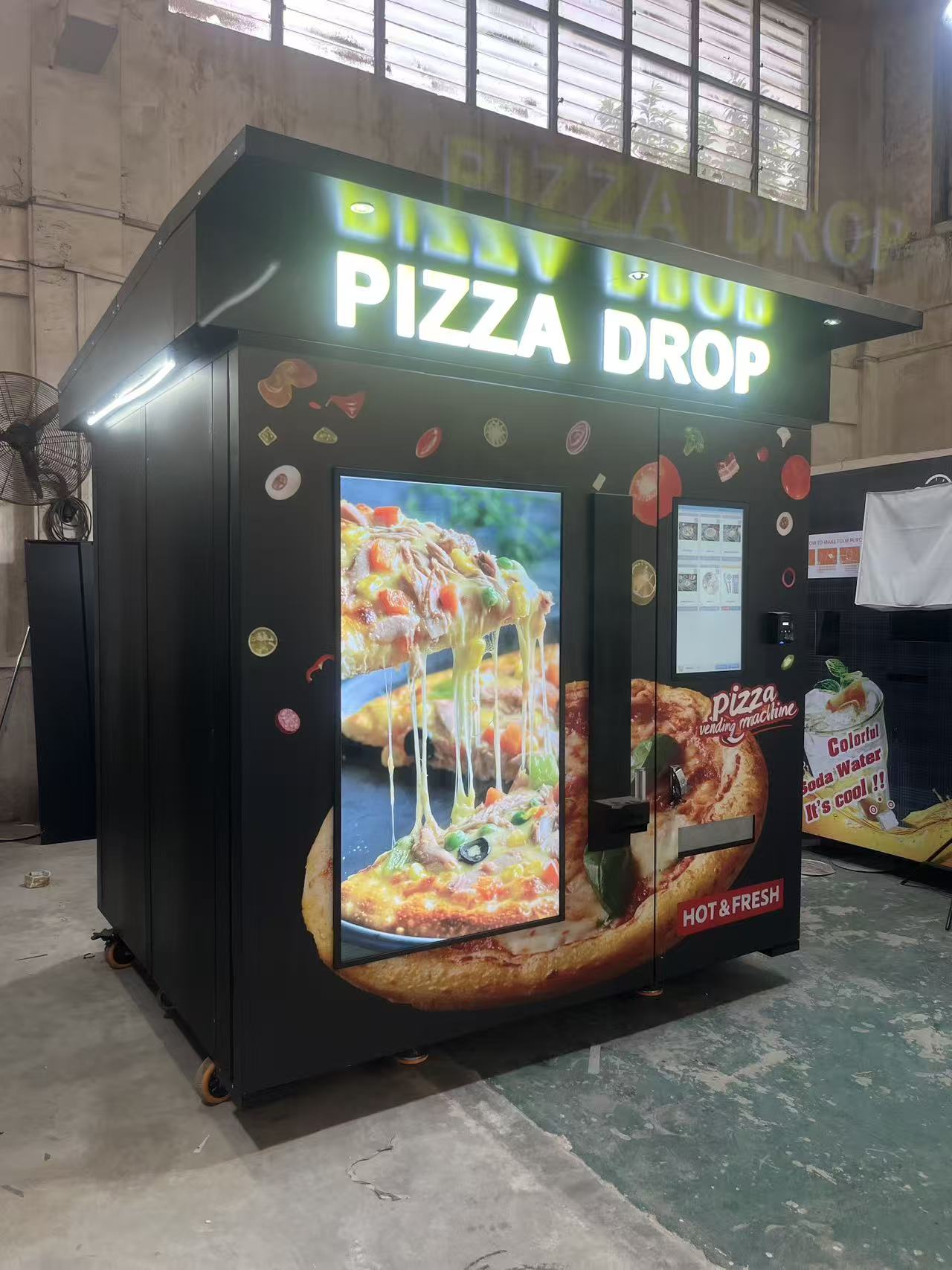
🍕 The Future is Hot: Mastering Your Automatic Pizza Vending Machine
In the age of on-demand everything, the automatic pizza vending machine is revolutionizing fast food. This comprehensive guide details the seamless operation of this robotic marvel, ensuring you get a hot, fresh pizza in just minutes.
How It Works: A 6-Step Robotic Masterclass
A typical robotic pizza machine operates with speed and precision, offering a consistent product 24/7. While some machines bake pre-assembled pizzas, others create them from scratch. Here is the general workflow:
- 1. Order Placement & Payment (The Touchscreen): The customer uses a high-resolution touchscreen interface to select their preferred pizza type (e.g., Margherita, Pepperoni, Four Cheese). Payment is accepted via card, mobile pay, or sometimes cash.
- 2. Ingredient Retrieval (The Refrigerated Core): Once the order is confirmed, the machine’s internal robotics select the necessary components from refrigerated, pre-portioned storage. This typically includes dough, sauce, cheese, and toppings. Freshness is paramount.
- 3. Assembly (The Robot Arm): If the machine makes the pizza from scratch (like the Let’s Pizza model), a robotic system mixes the dough, presses it flat, and then precisely applies the sauce, cheese, and selected toppings. If the machine uses pre-assembled pizzas (like PizzaForno), the chosen, uncooked pizza is transferred directly to the oven.
- 4. High-Speed Baking (The Integrated Oven): The assembled pizza is moved into an integrated, high-temperature oven (often pulsed-air convection or infrared). The machine dynamically adjusts the cook time and temperature to ensure a perfect bake, typically in just 3 to 5 minutes.
- 5. Dispensing & Boxing (The Final Transfer): A robotic arm removes the hot pizza from the oven. It is automatically placed into a cardboard takeout box, which is then sealed or closed.
- 6. Customer Delivery (Hot & Ready): The machine dispenses the packaged, piping hot pizza through a designated retrieval slot, ready for the customer to enjoy.
🛠️ Maintenance and Restocking: Keeping the Robot Running
While the machine is highly autonomous, regular operator involvement is crucial for quality control, cleanliness, and ensuring the machine stays stocked.
Restocking Protocol
- Frequency: Typically required every 24 to 72 hours, depending on sales volume and internal storage capacity.
- Inventory Check: Operators must check the levels of pre-portioned dough, cheese, sauce, and toppings, ensuring they have not exceeded their internal freshness timers.
- Date Stamping: All ingredients are usually barcoded or date-stamped. The machine’s software automatically rejects or locks out any components that have passed their expiration date, ensuring food safety.
- Process: Restocking involves unlocking the refrigerated compartment and inserting new, prepared components (e.g., placing new stacks of dough or refilling sauce reservoirs).
Cleaning and Hygiene
- Internal Cleaning: The oven and assembly areas require regular cleaning to prevent residue buildup, which affects both taste and machine efficiency.
- Exterior Cleaning: The touchscreen, payment terminal, and dispensing slot must be cleaned and sanitized frequently for customer satisfaction and hygiene.
- Waste Management: Automated machines include waste disposal systems for packaging and failed components. This must be emptied regularly.
⚙️ Technical Specifications (Typical Model)
Understanding the technical data helps operators manage power consumption and placement logistics.
| Specification | Typical Value / Range | Operational Impact |
|---|---|---|
| Footprint (W x D x H) | 1.8m × 1.2m × 2.4m | Requires a significant, stable location (similar to a large double vending bank). |
| Power Consumption | 6kW to 12kW (Peak during baking) | Requires a dedicated high-voltage electrical connection (often 208-240V). |
| Capacity | 70 to 120 Uncooked Pizzas | Determines the restocking frequency. High capacity minimizes daily visits. |
| Cooking Time | 3 to 5 Minutes | Key selling point; fast service. |
| Internal Temp | $2^\circ C$ to $4^\circ C$ (Refrigerated) | Strict adherence to food safety standards for perishable ingredients. |
| Connectivity | 4G/Wi-Fi Telemetry | Enables remote monitoring of sales, inventory, and error reports. |
Key Operational Benefits
- 24/7 Availability: Provides a convenient meal option at any hour.
- Consistency: Robotic precision guarantees the same ingredient ratios and cooking time for every order.
- Minimal Human Intervention: Once stocked, the machine operates autonomously, significantly lowering labor costs.
- Speed: Delivers a fresh, hot meal in a fraction of the time compared to a traditional pizzeria.
For a detailed visual explanation of one of the leading pizza vending machine models, you can watch this Pizza Vending Business Explained video.
This video explains the business model and operation of a specific pizza vending machine, offering a real-world example of the technology described.